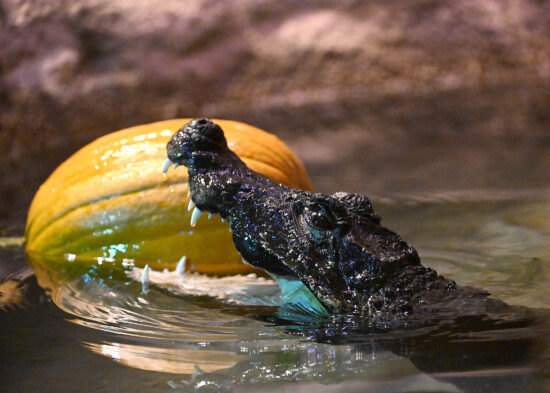
Crocodiles have been around since dinosaurs roamed the Earth, yet there’s still plenty to discover about them. During Croc-tober at Brookfield Zoo Chicago, guests can learn more about these reptiles and the important role they play in freshwater ecosystems.
At noon on October 16 and 23, animal care specialists will share insights about crocodiles at Habitat Africa: The Forest. It’s a chance to look beyond their mysterious appearance and learn how they survive in the wild.
Meet Krackle, an African Dwarf Crocodile
Brookfield Zoo Chicago cares for Krackle, a male African dwarf crocodile born in 1983. He weighs around 70 pounds and measures more than five feet long. Although Krackle might sound big, African dwarf crocodiles are the world’s smallest crocodiles.
In the freshwater waterways of sub-Saharan Africa, these crocodiles can keep most of their bodies submerged while watching for prey. Their eyes sit high on their heads, so they can look above the water without revealing much of themselves. Large, bony scales help protect them from bigger predators. And despite their smaller size, African dwarf crocodiles swallow their prey whole.
Why Crocodile Conservation Matters
Crocodiles do more than capture our attention. As part of freshwater food webs, they help maintain a balance among the animals living in and around waterways. Protecting crocodiles can help support healthier ecosystems.
African dwarf crocodiles are listed as Vulnerable on the IUCN Red List because of threats including hunting and habitat loss. Learning about Krackle is also an opportunity to think about what happens when the places wild crocodiles depend on are at risk.
If you’re visiting Brookfield Zoo Chicago on October 16 or 23, stop by Habitat Africa: The Forest at noon to hear from the animal care specialists. You may come away with a new appreciation for an animal that has survived for millions of years—and still has plenty to teach us.


Leave a Reply