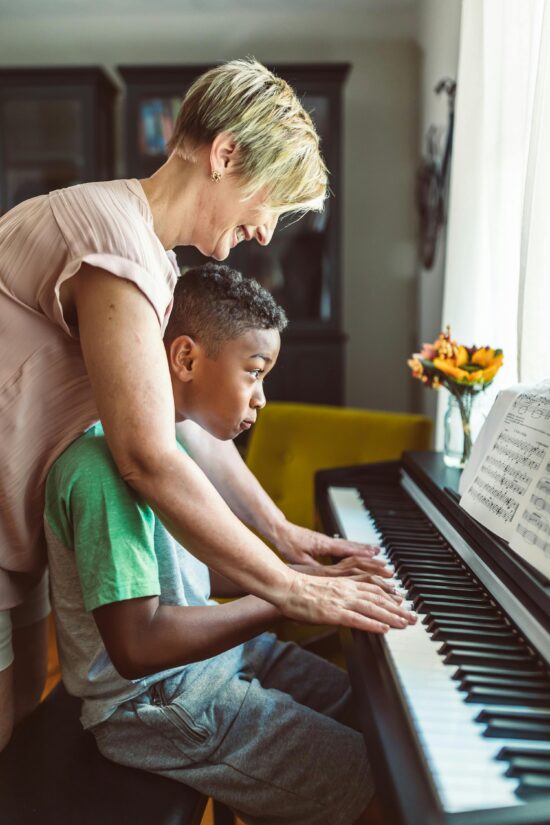
 Pexels – CC0 License
Learning something new as an adult can feel like stepping into uncharted territory, but sharing that journey with your child is going to add an extra layer of connection. Whether it’s a musical instrument, cooking recipe, or diving into something deeper, teaming up creates a great experience, there’s a sense of purpose and discovery. So here’s a few things to consider as part of your learning adventure:
Being Honest About the Challenge
Before you begin, assess how challenging this new skill might be for both of you. We have to remember that adults and children do learn differently. While children are like a sponge and absorb intuitively and without fear, adults bring patience and context. Taking on an instrument or a technical skill like the piano does require time and steady practice.
You may wonder how hard is it to learn piano? And understanding this actually gives some perspective because patience and persistence can matter more than raw talent. By acknowledging from the outset that progress may be slow, you set realistic expectations, but also show your child that effort is more important than perfection because, as we fully well know, perfection does not exist.
Create a Learning Routine That Works for Both of You
You have to pick something that sparks the excitement in both of you, but when you create a routine that has structure and is flexible, this is what will build overall confidence. Children’s attention spans will differ from yours as an adult, so maybe short, frequent bursts of learning can be more sustainable rather than long, intense study sessions.
A regular rhythm, for example, 20 minutes a few evenings a week, can help both of you stay committed without feeling overwhelmed. It’s about SMART goals and ensuring that when you integrate small steps in the right direction, don’t forget to celebrate, no matter how small it is, because this reinforces effort and highlights progress is a journey rather than a race.
Mistakes Are Not Bad
Instead of referring to mistakes as major errors, use them and reframe them as opportunities. Scientifically, the brain locks on to mistakes because we learn better from them. And we should remember this because perfection doesn’t exist, but when we stumble, and perhaps maybe your child sees you agonizing over Mary Had a Little Lamb on the piano, then that’s okay and normalizes the idea that mistakes are a big part of learning.
So rather than thinking you need to correct everything quickly, you need to ask curious questions and wonder how you may fix that next time or what you thought happened. This is a great collaborative approach for both of you, and this will foster a problem-solving mindset.
The Journey Matters More Than the Destination
Learning alongside your child is about building memories as much as building skills. The goal isn’t just about gaining competence, but creating shared experiences that get you closer together.
It’s a journey that you can adapt to your lifestyle, whether you are homeschooling your child or simply looking for a meaningful after-school activity. By growing together, you’re expanding your knowledge and strengthening the bond that makes every lesson worthwhile.

